There’s a very specific kind of rabbit hole that I am apparently incapable of resisting.
Family history.
You know how some people can open Ancestry, look up one relative, find a birth date, and then CLOSE THE WEBSITE?
WHO ARE THESE PEOPLE?! Because I cannot relate. 🤣
I go looking for one person and suddenly it’s three hours later, I’ve got 19 tabs open, I’m squinting at a census record from 1880, and I’m trying to figure out why somebody’s name is spelled four different ways.
And the worst part? I’m having the time of my life.
It Starts With a Name. And Then a Castle.
Take my fourth great-grandmother, Barbara Katherine Schmeisser. According to a family legend, her father was a Bavarian COUNT, she fell for Peter Lang—a forester associated with a castle—and she supposedly gave up her inheritance to marry him. EXCUSE ME?! That’s a historical romance novel, not a family-tree entry. 🤣
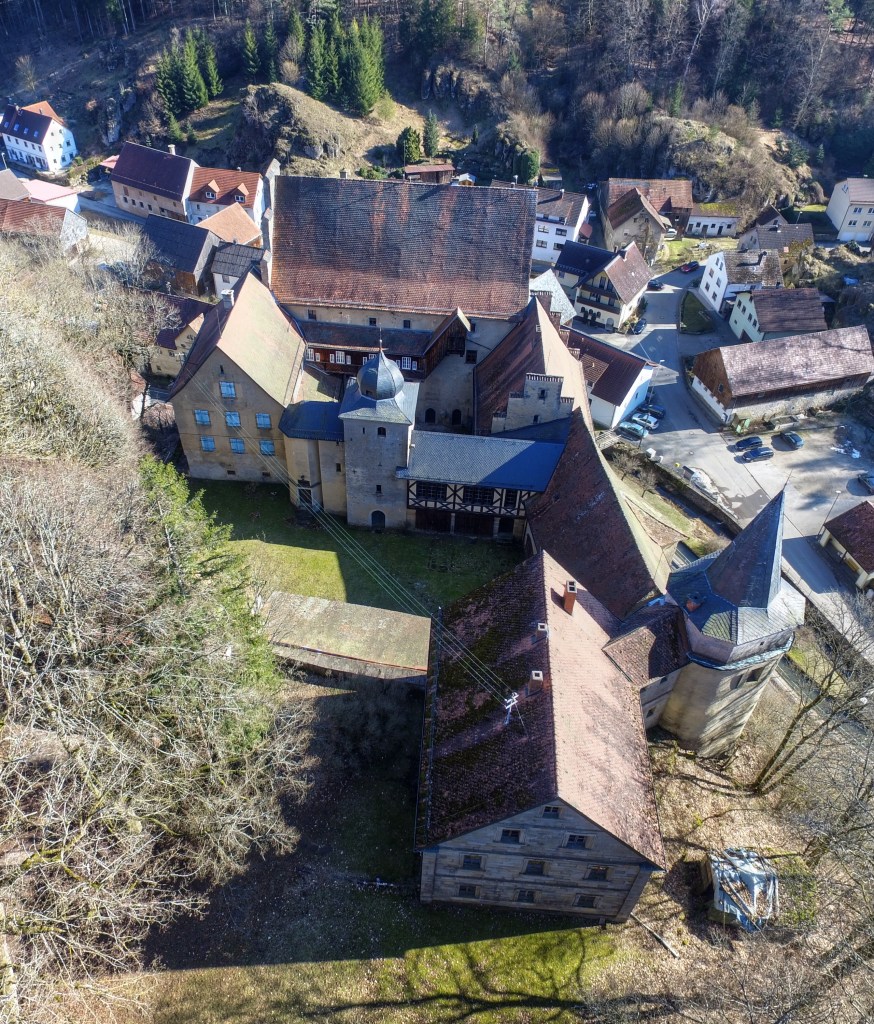
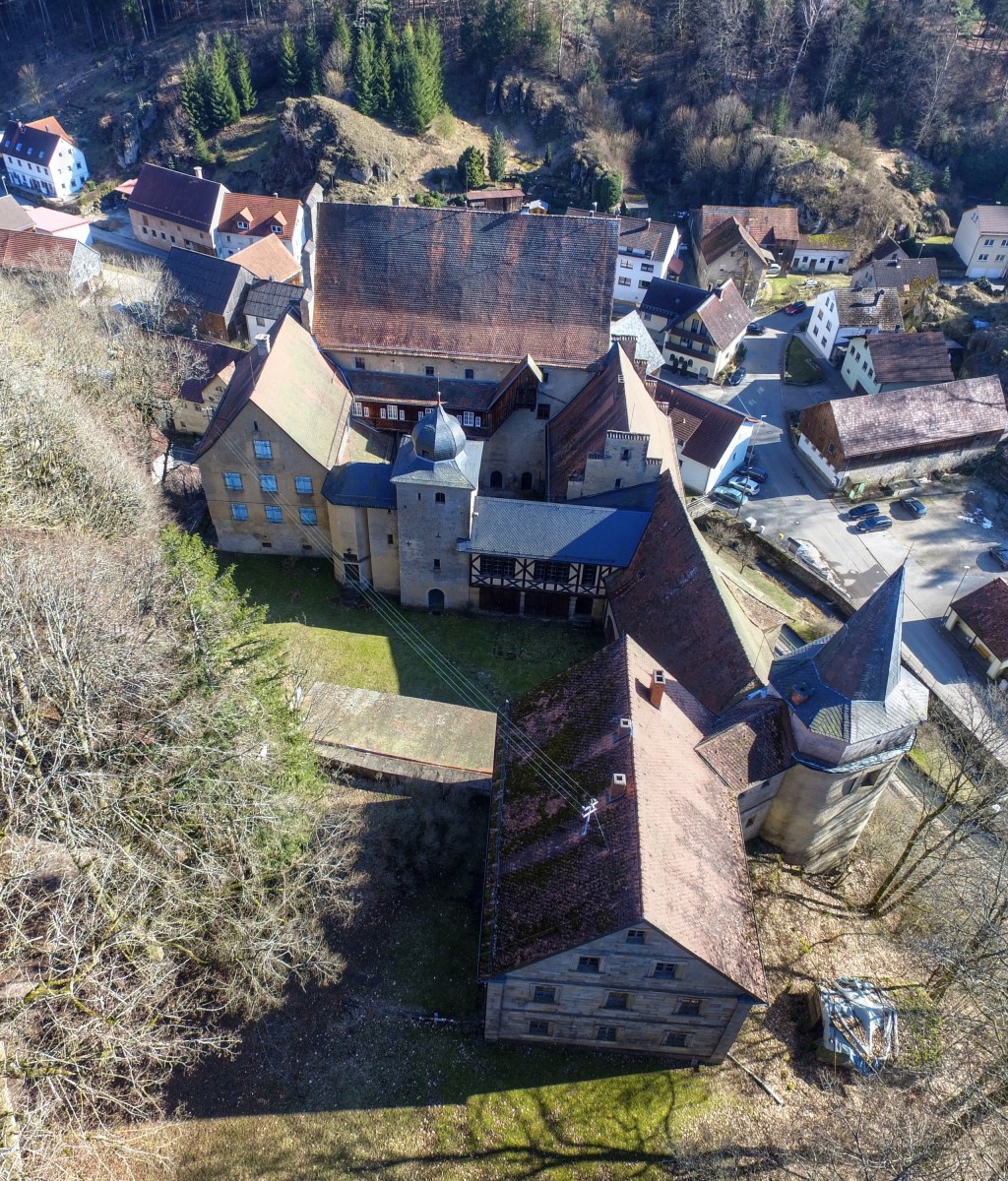
A handwritten family note gives Barbara’s birth as August 28, 1798, and her marriage to Peter as August 12, 1820. But the count, the castle, and even her exact parentage still need original records. The castle is real. Whether my family actually lived or worked there is the mystery.
One Ship, One Forester, and a Whole Lot of Langs
Then I found a published transcription of the Goethe, which arrived in New Orleans on January 19, 1855. Lines 103–106 list Peter (54), Barb. (52), Heinr. (20), and Christianne Lang (15), all from Bavaria and headed to Missouri. And Peter’s occupation? FORSTER. FORESTER! 🤣 That supports the occupation in the family story—not employment at a particular castle.

AND THERE WERE MORE LANGS ON THE SAME SHIP! Entries 125–127 list Christ. Lang (28, a weaver), Maria Lang (52), and Louise Lang (9), also from Bavaria but bound for Illinois. Relatives? Neighbors? Coincidence? I have no idea, and the manifest doesn’t establish their relationships. Onto the research list they go.
The captain’s statement says no passengers died on the ocean voyage. Family accounts say Peter later died while traveling upriver and was buried near Cairo, Illinois, possibly in a hillside cemetery. I still need a burial record; even the reported death year varies between 1855 and 1865. Meanwhile, an 1860 Missouri census has a promising pair—Henry and Barbia Long—who might be Peter’s son and widow. Might. I am learning not to adopt every similarly named census household. 🤣
The Daughter Who May Have Arrived First
Another fascinating lead is Eva Margaretha (also called Caroline) Lang, listed on the Clementine arriving at Baltimore in 1840, fifteen years ahead of Peter and Barbara. A Perry County Lutheran Historical Society account connects her to John Michael Sandler, whom she married in St. Louis in 1842. The couple raised a large Missouri family and, heartbreakingly, reportedly lost four children in 1873. Her placement beside other Lang travelers suggests possible family connections, but I’m still seeking a baptism naming her parents. This whole branch deserves its own article.
Wait. Was the COUNT on the Wrong Side?
A correction on a Lutheran historical-society article suggests Andreas Schmeißer/Schmeußer wasn’t a count at all, while his wife Margaretha von Giech may have been tied to a noble family. That is a clue, NOT proof of Barbara’s connection. Naturally, I did the perfectly reasonable thing: I EMAILED BAVARIA. IN GERMAN. 🏰🤣
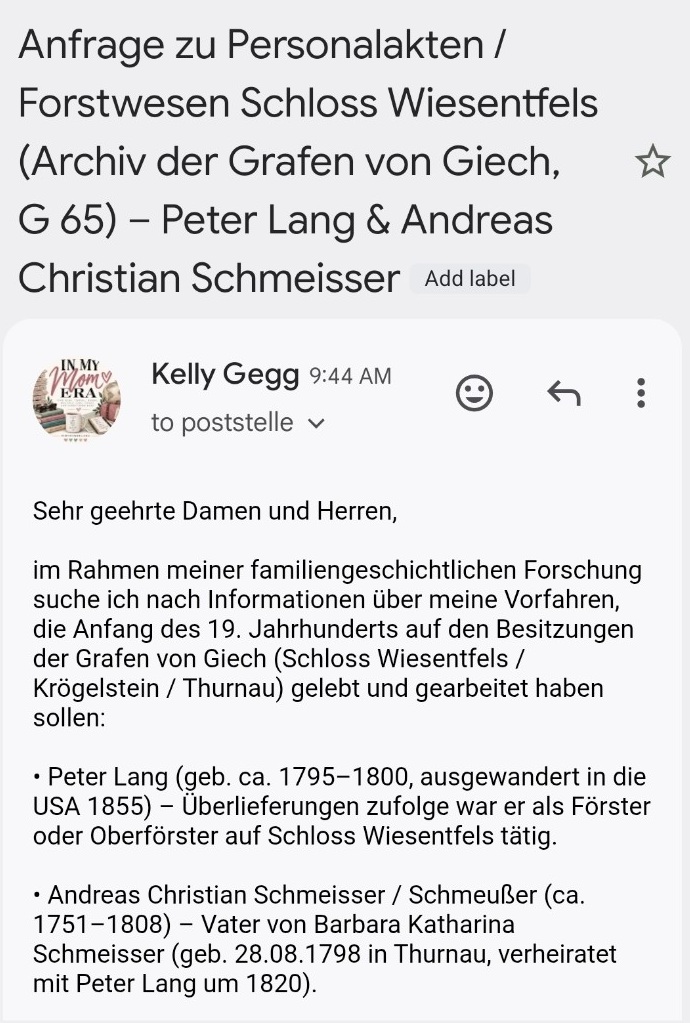
My email asks about Peter’s possible forestry work at Schloss Wiesentfels and Andreas Christian Schmeisser, even citing the von Giech estate archive reference G 65. No answer yet. If they find a personnel file, somebody may need to pick me up off the floor.
Still on my research list: Barbara’s baptism and marriage; the von Giech connection; Peter’s burial; the Henry/Barbia Long household; Eva’s parentage; and those Illinois-bound Lang passengers. I have plenty for future installments. For now, I need a bigger notebook. 🤣
Sources and research leads: Perry County Lutheran Historical Society on the Sandler family; the Schmeuszer count legend; the von Giech correction; 1855 Goethe passenger transcription; 1840 Clementine transcription; and 1860 Bois Brule census transcription. These sources are leads where original records remain to be checked.
But WHO Were They?
That’s the thing about genealogy. At first, it’s names. Birth. Marriage. Children. Death. And then, somewhere along the way, those names start becoming PEOPLE.
People who fell in love, raised children, buried people they loved, moved across the country, and made decisions that changed the course of their families forever. Including mine.
Were they funny? Did they have terrible tempers? Did they love books? Did they sing while they cooked? Did they have five children who drove them absolutely bonkers? Because I feel like I could relate to that last one. 🤣
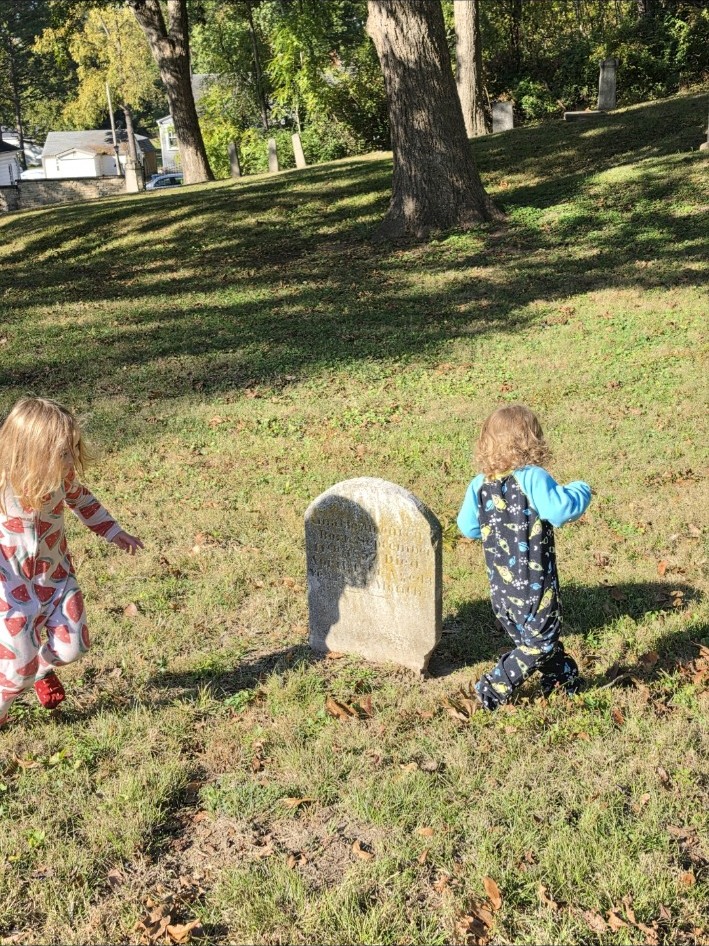
These people lived entire lives, and sometimes all that’s left is a name on a document. I find that fascinating. And a little heartbreaking.
The Records Don’t Tell the Whole Story
I love old records. Census pages. Marriage certificates. Newspaper clippings. Obituaries. Military documents. There’s something almost magical about seeing an ancestor’s name written down a hundred or two hundred years ago.
But a census might tell me where somebody lived. It doesn’t tell me whether they were happy. A marriage record might establish that two people married. It doesn’t tell me whether the marriage caused a scandal at a Bavarian castle.
And a story added to somebody else’s family tree? That’s a clue worth following, not a fact I can automatically claim. Which, naturally, means I have MORE QUESTIONS.
And Then Come the Mysteries
While trying to remember Barbara’s name tonight—yes, I remembered the supposed COUNT but not my own fourth great-grandmother’s name, LOL—I stumbled into several more rabbit holes.
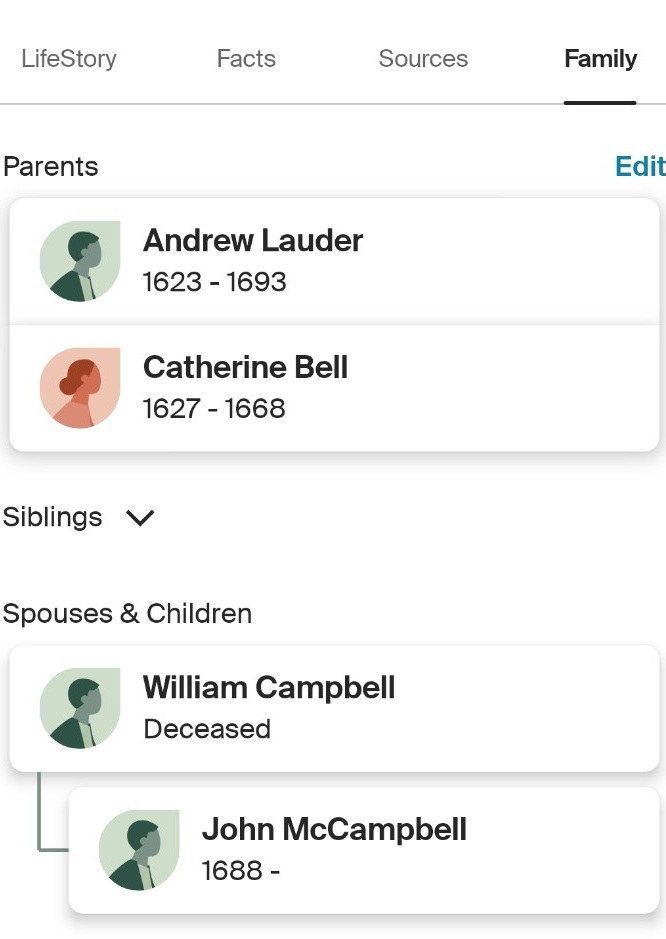
First, I saw the BELLS. Bell, you say? Like ALEXANDER GRAHAM BELL?! Naturally, my brain immediately decided we needed to investigate. Today’s digging led into older Bell records, including Catherine Bell and Andrew Lauder, and a disagreement over whether a proposed baptism belongs in 1622 or 1627. Meanwhile, the inventor’s documented family leads through Bell ancestors including David Bell and Isabella Swan. Do the two Bell lines meet? I have not established that. Yet. 🤣
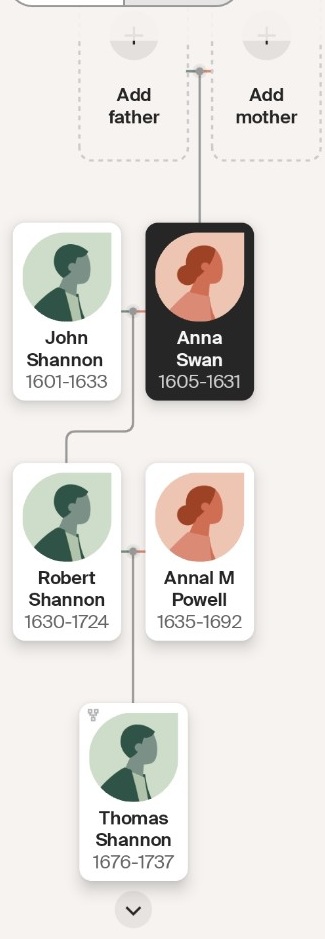
But then—AND I CANNOT MAKE THIS UP—I noticed SWAN in my own tree. Anna Swan (1605–1631), married to John Shannon (1601–1633), appears as the mother of Robert Shannon (1630–1724), whose son was Thomas Shannon (1676–1737). Isabella Swan in Alexander Graham Bell’s ancestry and Anna Swan in my tree: same surname, not a proved connection. Not even close to proof. But I am absolutely putting it on the research board because WHAT ARE THE ODDS that my wandering eyeballs would land there today? 🤣
Then DICKINSON popped up, and naturally I thought, AS IN EMILY DICKINSON?! I looked at that line, ran into another uncertain connection, and have decided Emily Dickinson is NOT my relation… for today. LOL. A shared surname and speculative tree links are not enough, and that branch is staying on the ‘maybe someday’ shelf.
Samuel VanDever: WHERE DID YOU GO?
And then there’s Samuel VanDever, listed in my tree as born around 1875 in Tennessee, connected to Louise Elise Hoffmann and their daughter Edith Marie VanDever. This gentleman…. AHEM – or scoundrel 👀🤣 LOL – is my 2nd great grandpa on my dads side. And I’ve been trying to track him down since about 2020. UGH!
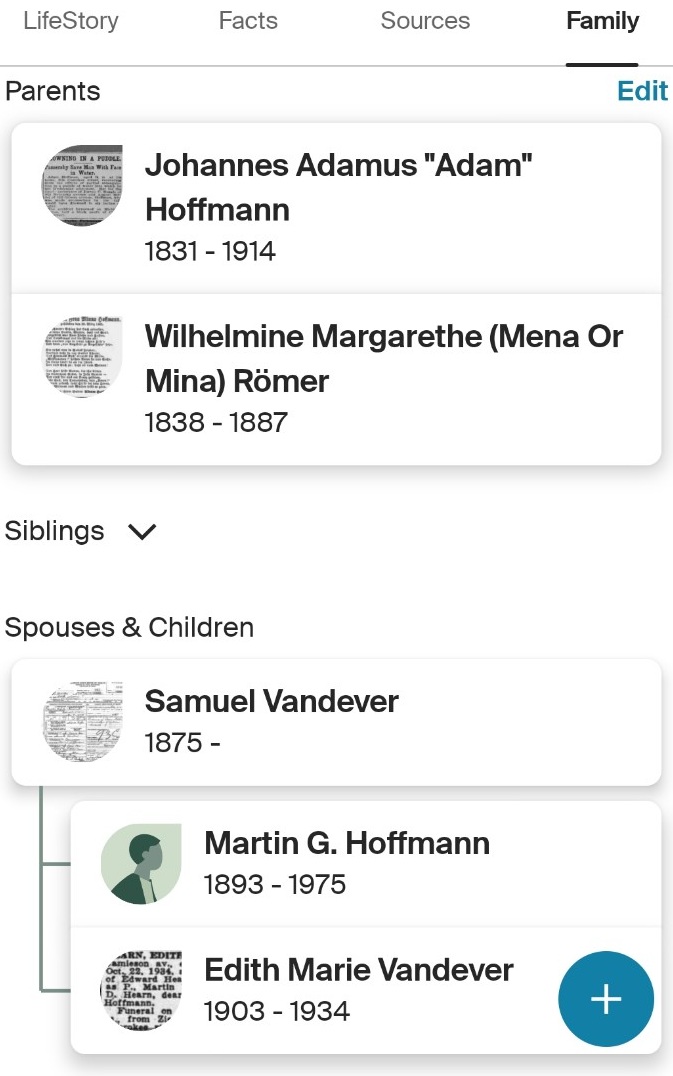
Today’s search still did not produce a satisfactory, documented answer for his marriage, death, or whereabouts. He seems to disappear from the family trail by the time of the 1910 census, but absence from one household isn’t a death record or proof of abandonment. I also have a potentially useful question about Martin G. Hoffmann’s parentage. The research to-do list is growing; Samuel, unfortunately, is not cooperating.
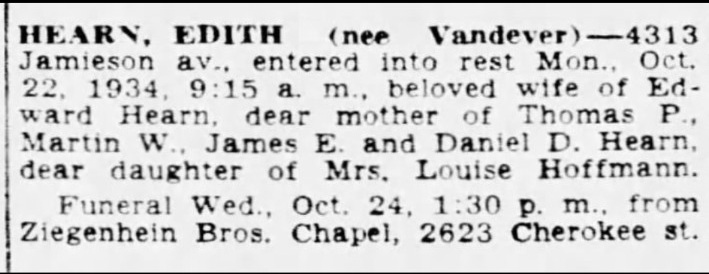
I have now chased census returns, family-tree claims, and historical clues long enough that even Google AI didn’t magically resolve it. SAMUEL. SIR. A PAPER TRAIL WOULD BE NICE. 🤣
I don’t know yet. That’s the point. Every time I think I’m about to answer one question, seventeen more show up and pull up chairs.
It’s like reading a mystery novel. Except the characters are related to you, and there’s no guarantee the author ever bothered to write an ending. Rude, honestly. 🤣
And Sometimes, I Actually Find Answers!
And before you start thinking my entire family tree is made up of missing men, questionable counts, and surnames that make me yell at my phone, I HAVE actually traced some fascinating connections. Like the YOUNGERS. Yes, the surname that immediately sends my brain straight to the notorious Missouri outlaw gang. 🤣
In my tree, Susannah Elizabeth Younger Cartee (1791–1840) is my fifth great-grandmother, and Henry W. Younger (1775–1830) appears as her father. Earlier tree entries appeared to make Cole, Bob, and Jim Younger her brothers. That was a major red flag: the dates do NOT fit. The infamous Younger brothers belonged to a later generation.
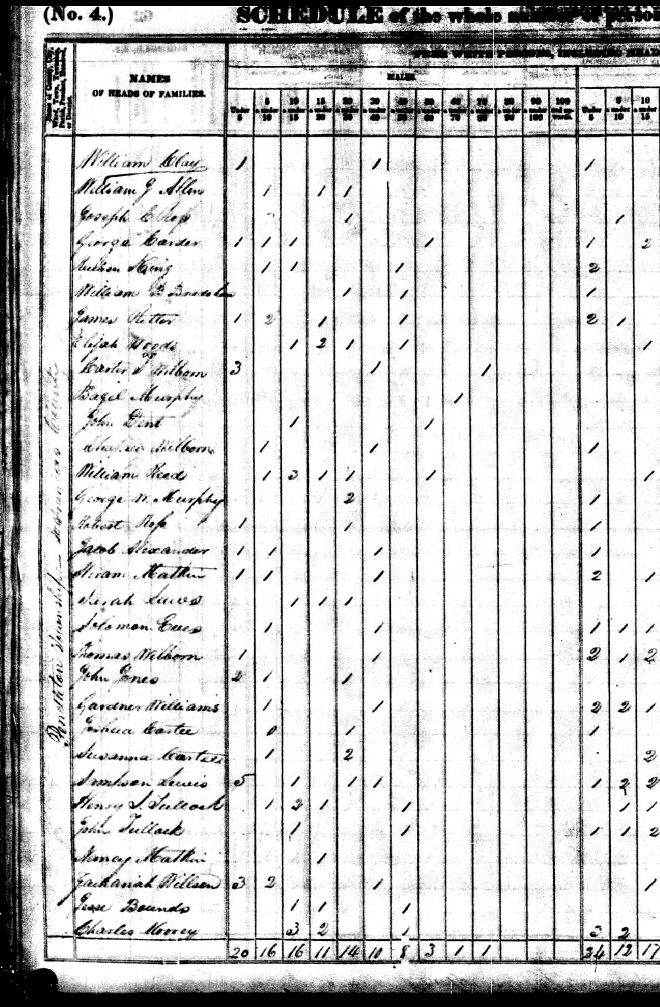
Today’s tree digging instead pointed to a cousin relationship, not a sibling relationship: Susannah appears as a first cousin in the relevant older Younger branch, while Ancestry has suggested a much more distant Younger/Dalton connection—second cousins six times removed in one displayed relationship path. These are leads reported by tree tools, not independently established kinship. I still need to follow each parent-child link back to the shared ancestors and prove the relationship with records before I claim the outlaw family as mine. BUT, I’m 99% certain it’s correct!
And yes, the DALTON name has entered the room, too. Because obviously the Younger gang wasn’t enough Missouri outlaw homework for one afternoon. 😂
But THIS is what I love about genealogy. Sometimes you find an answer. Sometimes you find a new contradiction. And sometimes you find both in the same five minutes. I’ve even written about Johnny Rion, country music, and a family name I passed down to my son—because these names have a way of showing up in the present, too.
Someday, We’ll Be the Ancestors
Here’s the part that really gets me: one day, somebody might be researching ME.
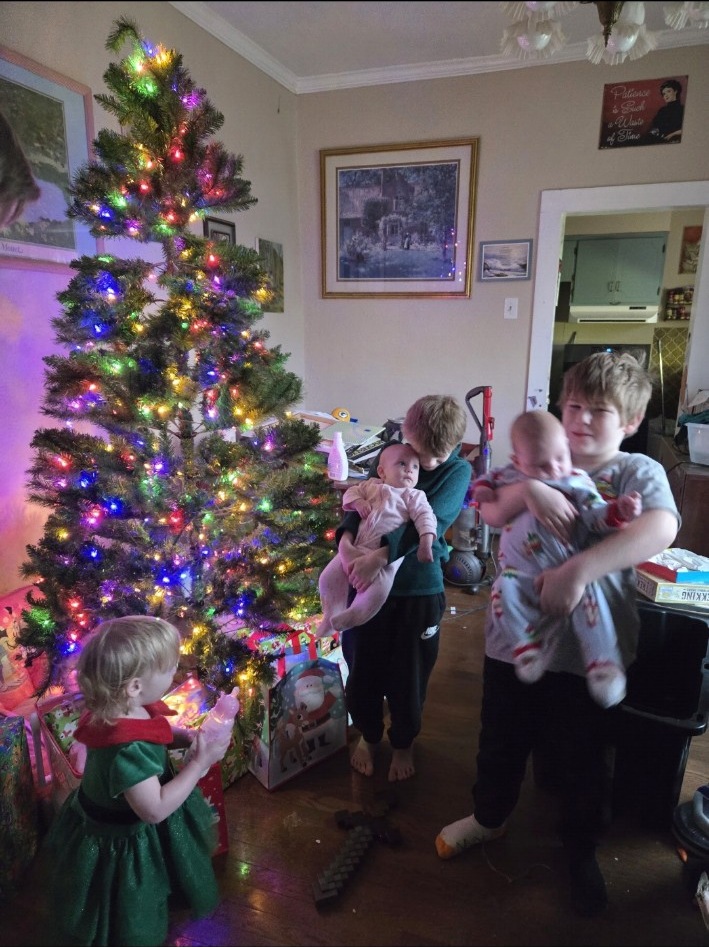
Some future grandchild or great-great-grandchild might find my name and learn that I had five children, lived in Missouri, and married a man named Tyler.
But will they know that I loved books? That I was constantly dragging my family on road trips? That I could spend hours researching one historical question because I have absolutely no self-control? It’s the same question I kept coming back to while writing about the people who came before us and the stories we leave behind.
Will they know I started writing because I had stories I didn’t want to lose? Maybe that’s part of why I love doing this so much. Researching my ancestors makes me think about the stories we’re leaving behind, too.
More Than Names on a Tree
I don’t think genealogy is about collecting names. Not for me, anyway. It’s about trying to understand the people who came before us, the choices they made, the hardships they survived, and the little pieces of themselves that might still exist in us.
I may never know whether Barbara really gave up a castle for love. I may never find Samuel’s missing chapter. And the Bells and Dickinsons may turn out to be nothing more than surnames that made me yell at my phone.
But somewhere in those old records and family stories are people worth remembering. And I’m going to keep looking for them.
Even if it means another three hours, 19 browser tabs, and a census record I absolutely cannot read. ❤️
It Takes a Village to Research a Village
They say it takes a village to raise children. Well, apparently it takes a village to research a village, too. At this point, I’m assembling a search party for dead people. 🤣
So here’s my invitation to fellow genealogists, archivists, local historians, distant cousins, and anyone who happens to stumble across this article while searching for one of these names: PLEASE reach out. Have a church register, passenger record, cemetery clue, family photograph, correction, or a completely different interpretation? I accept your help willingly! I want the real stories—even when the records ruin a perfectly good castle legend.
Have you ever uncovered a family mystery, or are you chasing one right now? Tell me. I clearly need more rabbit holes and possibly a research village large enough to keep up with them. ❤️
And if anyone needs me, I’ll be in the archives, assembling a search party for dead people who apparently didn’t believe in leaving a decent paper trail. 🤣
Enjoying In My Mom Era? Love an unresolved family mystery, an unexpected ancestor, or a very stubborn paper trail? Subscribe to In My Mom Era and join my ongoing search party for dead people. 🤣🌳
With love, laughter, and a few hundred deceased relatives,
Kelly, I’M ME 💗




Leave a Reply