
A preschool classroom might look like finger paint, blocks, picture books, and children figuring out who gets the red crayon. So how did researchers end up connecting those early years with high school graduation, college enrollment, and even fewer juvenile arrests? I read that headline and immediately had questions. Lots of them. 😂
I’m a mother of five, and preschool isn’t some distant debate in our house. My two oldest boys attended both preschool classes offered at their school: one for three- and four-year-olds, and another for four- and five-year-olds. Now, with three younger children, I find myself looking at the decision differently.
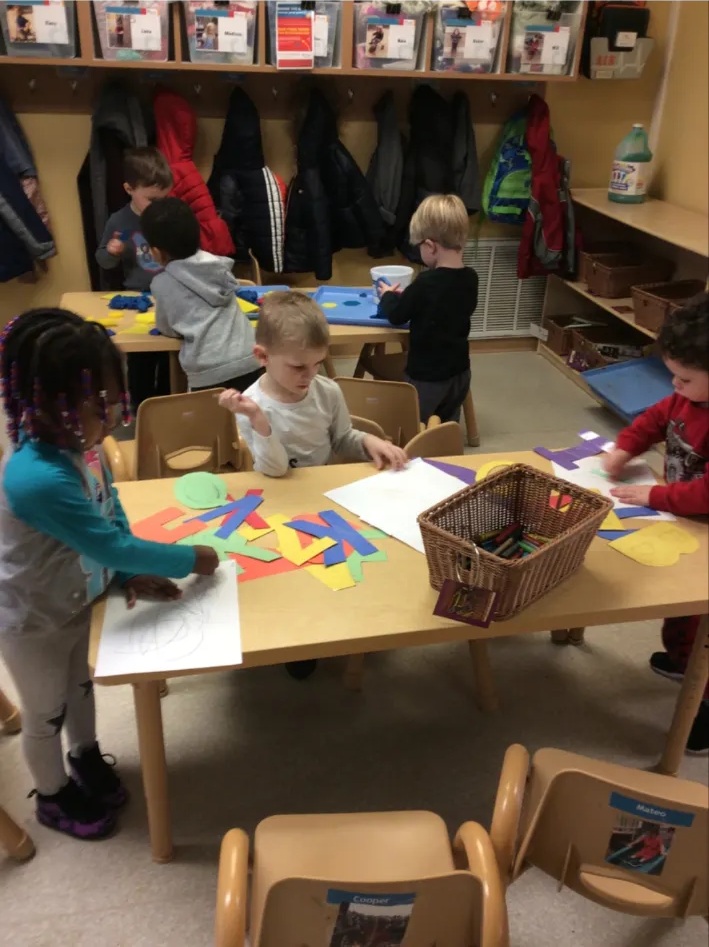
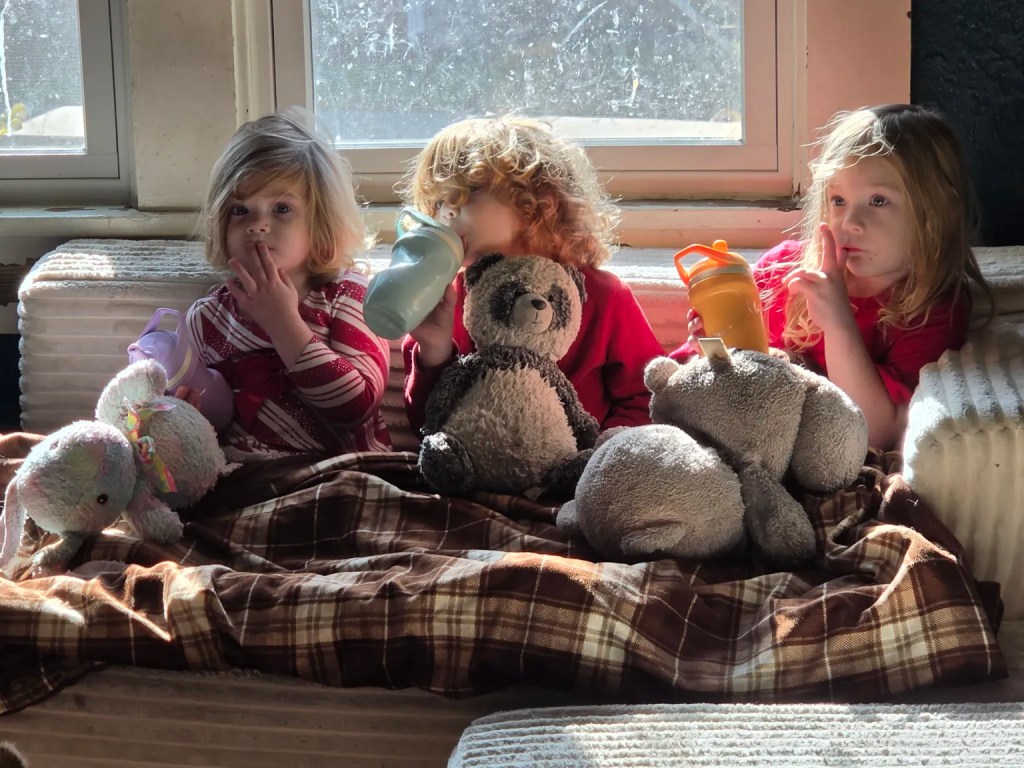
Not because I value education any less. Quite the opposite. But childhood is short. And while I want to give my kids every possible advantage, I also want to let them be little for as long as I reasonably can. Can both things be true? I keep coming back to that feeling in my earlier story, Let Them Be Little.
That question led me to a written interview with John Michael Nix of Archway Academy, an early childhood education organization. We discussed what preschool actually teaches, whether there’s a perfect age to begin, what families can do at home, and whether we’ve started placing entirely too much pressure on three-year-olds.
First, a little context: a meta-analysis of 22 early childhood education studies found an average 11.4-percentage-point increase in high school graduation rates and an 8.3-percentage-point reduction in grade retention. Separately, research on Boston public preschool admissions found that attendance increased on-time college enrollment by 8.3 percentage points (an 18% relative increase). These studies examined different programs and groups of children, with different research designs. Their findings deserve careful interpretation; attending preschool is not a guarantee of any particular outcome.
Meet John Michael Nix
John Michael Nix | Regional Director of Operations, Archway Academy | Early Childhood Education Leader & Advocate
With more than 25 years of experience in early childhood education, John Michael Nix is a dedicated leader, advocate, and voice for the importance of high-quality early learning.
As Regional Director of Operations for Archway Academy, a family-owned preschool organization serving South Carolina families since 1985, John Michael provides strategic leadership across multiple campuses, focusing on educational excellence, operational growth, educator development, and meaningful family engagement.
Beyond his operational leadership, John Michael serves on the Board of the South Carolina Association for Early Care and Education (SCAECE), where he advocates for greater access to quality childcare, stronger support for early childhood educators, and policies that recognize early education as essential to both childhood development and a thriving workforce.
A passionate advocate for children, families, and educators, John Michael contributes to conversations on early learning, school readiness, childcare accessibility, and the challenges facing today’s working families through media interviews, community partnerships, and industry engagement.
Throughout his career, he has remained committed to one guiding belief: Investing in early childhood education is an investment in the future of our children, our communities, and our economy.
In the Interview Room: John Michael Nix
Below is our written Q&A. Some overlapping questions were combined by the interview team; John’s answers are reproduced in full.
1. Early experiences and their long-lasting effects
QUESTION 1 · IN MY MOM ERA
The research connecting preschool attendance to higher graduation rates, increased college enrollment, and even fewer juvenile arrests is fascinating. But for parents who aren’t familiar with educational research, how can experiences at ages three or four have such lasting effects? What do you believe is happening during those preschool years that helps explain such a remarkable long-term difference?
JOHN MICHAEL NIX:
When we talk about the long-term benefits of preschool, we’re really talking about the foundation we establish during a child’s earliest years.
Quality early childhood education is about much more than learning letters, numbers, and colors. It’s about helping children develop confidence, independence, emotional regulation, problem-solving abilities, and the skills necessary to build positive relationships.
Those early experiences shape how children approach learning and challenges throughout their lives. A child who learns to communicate their feelings, work through frustration, and interact positively with others is developing skills that extend far beyond the preschool classroom.
We cannot attribute every future success to preschool alone, but the research reinforces something those of us in early childhood education have understood for years: the earliest years matter tremendously.
2. Social and emotional skills
QUESTION 2 · IN MY MOM ERA
When we hear that preschool is associated with fewer juvenile arrests and behavioral difficulties later in life, it’s easy to focus on the statistics. But what are the actual social and emotional skills being developed that might contribute to those outcomes? And how much can we confidently attribute to preschool itself?
JOHN MICHAEL NIX:
I would argue that social and emotional development is one of the most important things happening in a preschool classroom.
Parents naturally get excited when their child learns to recognize letters or count to twenty, and those are wonderful milestones. But I’m equally excited when I see a child learn to share, resolve a disagreement, express frustration appropriately, or comfort a friend.
Those are foundational life skills.
At Archway Academy, we understand that children must feel safe, supported, and connected before meaningful learning can take place.
A child who feels confident, secure, and capable is much better prepared to embrace academic challenges as they grow.
3. Recognizing preschool readiness
QUESTION 3 · IN MY MOM ERA
As a mother of five, I’ve watched how differently children develop, even when they’re growing up in the same household. Are there certain personalities or developmental stages that benefit more from preschool than others? How can parents determine when their individual child is ready?
JOHN MICHAEL NIX:
One of the biggest misconceptions about preschool readiness is that children need to arrive already knowing certain things.
That’s simply not the case.
Children do not need to know their alphabet, count to a particular number, or demonstrate perfect independence before beginning preschool. Those are some of the very skills we help them develop.
Readiness looks different for every child. Some children are naturally outgoing, while others need more time to become comfortable in a group setting.
I encourage parents to look at preschool as an opportunity for growth rather than a test their child must pass.
A quality preschool should be prepared to meet children where they are developmentally.
4. The best age to begin preschool
QUESTION 4 · IN MY MOM ERA
Some families enroll their children in preschool at age three, others wait until four, and some don’t enroll at all before kindergarten. Does the age at which a child begins preschool significantly affect the long-term benefits? Is there an ideal starting point?
JOHN MICHAEL NIX:
There really isn’t one universal age that is right for every child or every family.
Children benefit from nurturing, stimulating environments beginning in infancy, but that doesn’t mean every family needs to follow the same timeline.
High-quality early childhood programs provide age-appropriate experiences that support development at every stage.
For infants, that may mean responsive caregiving, language exposure, and sensory exploration. For toddlers, it involves building independence, communication, and social interaction. For older preschoolers, we begin introducing more structured opportunities for early literacy, mathematics, and kindergarten readiness.
The most important consideration isn’t simply when a child starts. It’s the quality of the experiences and relationships they have.
5. Making early learning accessible
QUESTION 5 · IN MY MOM ERA
Preschool can be expensive, and access to quality programs isn’t equal everywhere. For families who simply cannot afford preschool, or who choose to keep their children home until kindergarten, what activities and experiences can help build those same foundational skills?
JOHN MICHAEL NIX:
I think it’s important to recognize that parents are their child’s first and most influential teachers.
While quality preschool offers tremendous benefits, meaningful early learning can happen in everyday family life.
Reading together, singing songs, exploring nature, cooking, asking questions, and having conversations all contribute to healthy development.
Parents don’t need expensive materials or elaborate educational activities.
What children need most is interaction, encouragement, consistency, and opportunities to explore the world around them.
We should also continue advocating for policies that make quality early childhood education more accessible to working families.
6. How parents can reinforce preschool learning
QUESTION 6 · IN MY MOM ERA
What role do parents and caregivers continue to play after a child enters preschool? Are there things families can do at home that meaningfully reinforce the developmental benefits of early education?
JOHN MICHAEL NIX:
My biggest recommendation is to make learning a natural part of everyday life.
If your child is learning about colors, point them out during a walk. If they’re exploring counting, count the apples you’re putting into your grocery cart. If they’re learning about emotions, talk about how characters in a bedtime story might be feeling.
These small interactions are incredibly meaningful.
At Archway Academy, we believe strong partnerships between families and educators are essential.
When children see that their parents are interested in what they’re learning, it reinforces their excitement and builds confidence.
Learning shouldn’t stop when a child leaves the classroom, but it also shouldn’t feel like homework.
7. The importance of play-based learning
QUESTION 7 · IN MY MOM ERA
There’s an ongoing debate about play-based learning versus more structured academic instruction. Should preschoolers be learning letters, numbers, and early reading skills, or are imaginative play, social interaction, and emotional development equally — or perhaps more — important at that age?
JOHN MICHAEL NIX:
One of the most important things I wish every parent understood is that play isn’t a break from learning. Play is how young children learn.
When children build with blocks, they’re exploring early mathematics, engineering, and problem-solving.
When they engage in pretend play, they’re developing language, creativity, cooperation, and emotional understanding.
When they explore outdoors, they’re developing curiosity, observation skills, and an understanding of the natural world.
At Archway Academy, our approach combines intentional teaching with developmentally appropriate, hands-on experiences.
Children learn best when they’re actively engaged, curious, and enjoying the process.
8. Avoiding academic pressure too early
QUESTION 8 · IN MY MOM ERA
One of the things that concerns me as a parent is how much pressure children face to achieve academically at younger and younger ages. Is there a danger that emphasizing preschool’s connection to graduation and college attendance could encourage parents to push children too hard, too early?
JOHN MICHAEL NIX:
This is something I feel very strongly about.
In our eagerness to prepare children for the future, we sometimes place expectations on them that aren’t developmentally appropriate.
A three-year-old needs to be three.
That means having opportunities to play, explore, make mistakes, ask questions, and develop at their own pace.
Academic readiness is important, but it should never come at the expense of curiosity, creativity, or emotional well-being.
We shouldn’t be trying to make childhood shorter.
We should be creating experiences that make childhood richer while naturally preparing children for what comes next.
A three-year-old needs to be three.
9. What parents should look for during a preschool tour
QUESTION 9 · IN MY MOM ERA
Not all preschools are created equal. When parents tour a preschool or childcare facility, what should they actually be looking for? Are there warning signs that a program might not be providing the developmental benefits families expect?
JOHN MICHAEL NIX:
I always encourage parents to look beyond the appearance of the building or the materials in the classroom.
Pay attention to the relationships.
Are teachers interacting warmly with children? Do children appear comfortable, engaged, and happy? Are educators getting down on the children’s level and speaking to them respectfully?
Ask about teacher qualifications, curriculum, safety practices, communication with families, and how the school supports social and emotional development.
I also encourage parents to observe how leadership interacts with teachers and families.
A beautiful classroom is wonderful, but the quality of the relationships inside that classroom is what truly makes the difference.
10. Choosing between preschool and additional time at home
QUESTION 10 · IN MY MOM ERA
This next question is particularly personal for me. My children’s school offers two preschool classrooms: one for three- and four-year-olds and another for four- and five-year-olds. My two oldest boys attended both programs, but now that I’m making those decisions for my three younger children, I find myself questioning whether I want to start so early again. Not because I don’t value education — quite the opposite! But because childhood is so incredibly fleeting, and we only get these years with our children once. As parents, we’re constantly encouraged to give our children every possible educational advantage. But is there a point where the pressure to prepare them for the future takes something away from simply allowing them to be little? Is there room for parents to choose more time at home without feeling as though they’re sacrificing their children’s future success?
JOHN MICHAEL NIX:
First, I would encourage parents not to approach the decision from a place of guilt.
Every family has different circumstances, priorities, and needs.
Quality preschool can provide valuable opportunities for social interaction, independence, and structured learning experiences. At the same time, children can thrive at home in nurturing environments that provide meaningful interaction and opportunities to explore.
I would encourage families to consider their child’s personality, developmental needs, and the quality of the available preschool options.
The decision should be about finding the environment where their child can thrive, not feeling pressured to follow someone else’s timeline.
11. The most important advice for parents
QUESTION 11 · IN MY MOM ERA
Finally, if you could tell every parent of a three- or four-year-old just one thing about preparing their child for a happy, healthy, successful future, what would it be?
JOHN MICHAEL NIX:
Focus less on how quickly your child is learning and more on how deeply they’re developing a love of learning.
Childhood is not a race.
Every child develops at their own pace, and some of the most important lessons children learn during their earliest years cannot be measured by a worksheet or standardized assessment.
Confidence, kindness, curiosity, resilience, and the ability to build meaningful relationships are every bit as important as academic achievement.
At Archway Academy, our responsibility is not simply to prepare children for kindergarten. It’s to help build the foundation for a lifetime of learning.
If we can help children develop a genuine love of learning while allowing them to experience the joy and wonder of childhood, then we’re doing something truly meaningful.
What I’m taking away as a mom
I went into this interview curious about the big numbers: graduation rates, arrests, college. I came out thinking about smaller things: a child learning to share, handling disappointment, playing make-believe, or asking one more question on a walk. The National Association for the Education of Young Children also emphasizes joyful, play-based learning as part of developmentally appropriate early education. It reminds me of my conversation with Kim McLeod about raising creative kids and making memories through hands-on play.
I still have preschool decisions to make for my younger three. I’m not pretending one interview makes those choices for me—or for anyone else. But John’s reminder that childhood isn’t a race is one I’ll be holding onto.
I’d love to know how your family approached preschool. Did your children start at three, wait until four, or go straight to kindergarten? And what mattered most in your decision?
Learn more about Archway Academy and connect with the organization on Facebook.
A heartfelt thank-you to John Michael Nix for taking the time to answer my many questions, and to Giovanna Garcia at JOTO PR Disruptors for connecting us and helping bring this conversation to In My Mom Era. ❤️
Until next time, let them be little, let them get messy, and let them use every single crayon in the box. The ABCs will still be there tomorrow. ❤️
With love, a little finger paint, and three tiny humans growing up entirely too fast,
Kelly, I’M ME 🧡
More Real Motherhood, Right in Your Inbox ❤️
If you love honest conversations about parenting, family adventures, books, interviews, and the occasional unexpected rabbit hole, I’d love to have you along for the ride. Subscribe to In My Mom Era for new stories delivered to your inbox.





Leave a Reply