I have a thing for old towns.
Not necessarily the charming, beautifully restored kind with boutiques, coffee shops, and matching flower baskets hanging from every lamppost.
Although I love those, too.
I’m talking about the towns where half the storefronts are empty. Where an old factory sits abandoned at the edge of town. Where you can tell that, once upon a time, something important happened there.
Something that mattered to the people who called that place home.
My husband, Tyler, and I have driven through countless places like these with our five children. Sometimes we’re heading somewhere specific. Sometimes we’re just driving because, well, that’s what we do.
And inevitably, I’ll start asking questions.
What happened here?
What did this town look like fifty years ago? A hundred?
Who lived in that house? What did they do for work? Where did they shop? What happened to all the people?
Tyler is probably used to this by now.
The kids are getting there. LOL.
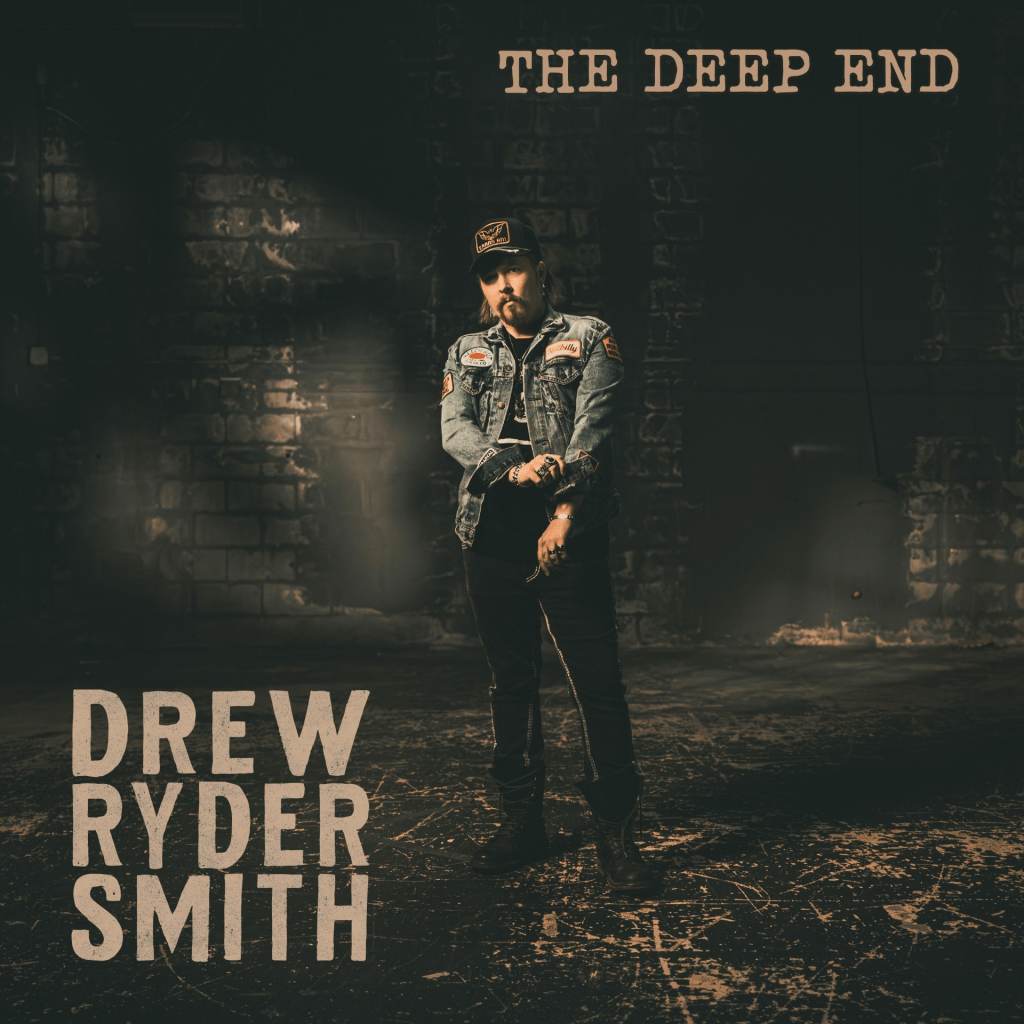
So when I had the opportunity to listen to Drew Ryder Smith’s upcoming album, The Deep End, and learned about the story behind his song “Textile Town,” featuring Steve Earle, I was immediately interested.
Because Drew wasn’t simply writing about an abandoned town.
He was thinking about the people who once made it come alive.
And that is exactly the kind of rabbit hole I love falling into.
When a Town Becomes a Memory
“Textile Town” was inspired by Drew’s visit to a former textile mill community in South Carolina.
The industry that once supported the community was gone. Much of the town had disappeared with it.
But the foundations remained.
The mill. The hospital. The school.
Even a few chimneys were still standing.
When I asked Drew what had stayed with him most after visiting, he told me it was the emptiness.
Yet he could still imagine the people who had lived and worked there.
I understand that feeling completely.
There’s something haunting about standing in a place where hundreds or thousands of people once went about their ordinary lives, knowing that so little remains to tell their stories.
But here’s what really caught my attention.
When I asked Drew what he would want to know from someone who had actually worked in the mill, he didn’t immediately focus on the hardships.
He wanted to know about the excitement.
Before the mill arrived, the surrounding area had essentially been farmland. Then suddenly there were jobs, opportunities, families, and an entire community growing around this new industry.
What must that have felt like?
To watch a town spring to life?
To see possibilities appearing where there had previously been very few?
I loved that perspective.
Because when we drive through these places today, we’re often looking at the end of their stories.
We forget that someone was there for the beginning.
And to those people, it probably felt like the beginning of something extraordinary.
The Women Behind the Work
Drew’s connection to factory life isn’t just historical curiosity.
His grandmother and great-grandmother both worked in factories.
And one of the memories he shared with me was especially poignant.
As a young child, probably in kindergarten or first grade, he went on a school field trip to the factory where his grandmother worked.
He remembers seeing her standing on the production line.
At the time, he was just a little boy visiting his grandmother at work.
But as an adult, he thinks about how many hours she spent standing in that same spot.
Every day.
Year after year.
He wonders whether the work became monotonous. How she managed it for so long. What those days actually felt like.
And I found myself thinking about my own ancestors.
Because, as some of you already know, I have a slight genealogy obsession.
Okay. A significant genealogy obsession.
I’ve collected more than 18,000 people in my family tree, and somehow, I still feel like I’ve barely scratched the surface.
I wrote about that particular rabbit hole in “I Have 18,000+ People in My Family Tree, and My Curiosity Is Only Just Beginning.”
But here’s the thing.
For me, genealogy has never been just about names and dates.
I want to know who these people WERE.
Were they happy? Did they love their jobs? Did they hate them? Were they funny? Stubborn? Adventurous?
Did they ever dream about living somewhere else?
What did they worry about when they went to bed at night?
And what would they think if they knew that generations later, some woman in Missouri was spending hours trying to piece together their lives?
Probably that I needed a hobby.
Or possibly fewer hobbies. 😂
Drew’s story about his grandmother reminded me that sometimes the most ordinary details are the ones we wish we’d thought to ask about.
A Song That Sounds Like Its Story
Musically, “Textile Town” feels like it belongs to another era.
There’s an unmistakable traditional country and Americana influence, and it fits the subject beautifully.
Drew told me that his songwriting already leans toward traditional country, but the story itself encouraged him to take that sound even further.
And then there’s Steve Earle.
Drew explained that the song had felt like a Steve Earle song to him from the beginning. Having Earle actually participate in the recording gave the project an entirely different kind of weight.
Imagine writing something that reminds you of an artist you’ve admired for years, and then having that artist become part of it.
That’s pretty incredible.
Tyler appreciated the traditional sound, too.
In fact, during our first listen, he compared Drew to early Jason Aldean.
More specifically, early Jason Aldean before he went all stupid.
Those are Tyler’s words, not mine.
I’m just reporting the facts here, people. 😂
Tyler is much more musically inclined than I am when it comes to identifying instruments and appreciating the technical side of a recording.
He played drums and the bodhrán, and he notices things I sometimes miss.
I tend to focus on the words.
The story.
The emotion.
But with The Deep End, we both found plenty to appreciate.
Our First Listen to The Deep End
I was fortunate enough to receive advance access to Drew’s new album, The Deep End, ahead of its October 28 release.
And naturally, I listened to it in the most professional setting imaginable.
The passenger seat of our vehicle.
With Tyler driving.
Five children in the back.
And at least one toddler playing with dinosaurs.
Welcome to In My Mom Era. LOL.
But the truth is, I love listening to music this way.
We get to experience it together. We talk about what we like, what surprises us, and which songs make us want to turn the volume up.
And this album gave us plenty to talk about.
“Like Your Love” immediately caught my attention.
I loved the positive message, Drew’s voice, and the feeling of the song. It was an excellent first impression.
Then “Lost Girl” opened with a harmonica, which I wasn’t expecting at all.
And I loved it.
“Textile Town” was exactly the kind of storytelling I’d hoped for.
“Memory” offered another interesting perspective. Drew wrote it from the point of view of the memory itself, which is such a clever way to approach a familiar subject.
And “Lie With Me,” featuring Rhonda Vincent?
Well.
Let’s just say the title is doing double duty.
It’s a song about an affair, and that particular play on words was not lost on me.
But then we reached “Bloodline.”
And OH, did that one get my attention.
What’s in a Bloodline?
If you’ve spent any time reading this blog, you probably understand why a song called “Bloodline” would interest me.
Family history.
Inherited traits.
The complicated ways our parents and grandparents continue to influence us.
Drew explores all of it.
I particularly loved the references to the traits we inherit from our mothers and fathers, including the ones we might not always want to claim.
And when I asked whether his family would recognize references in the album that other listeners might miss, he immediately brought up “Bloodline.”
He explained that his family understands exactly what he’s referring to, even when outside listeners might not grasp all the complexities.
I think every family has those stories.
The things everyone knows but nobody explains.
The personalities that seem to repeat themselves across generations.
The habits, expressions, tempers, talents, and little quirks that make us look at our children and suddenly recognize someone who lived long before they were born.
Sometimes that’s comforting.
Sometimes it’s complicated.
But it’s fascinating.
And for someone who can happily spend hours investigating the lives of people who died two hundred years ago, this song was practically made for me.
When the Album Gets Personal
As we continued listening, I found myself drawn more and more into the emotional storytelling.
“Leave Somebody” became another favorite.
It’s about being left without an explanation.
About the hurt of someone simply disappearing from a relationship rather than having the decency to offer closure.
Drew co-wrote it with Jason Jones and Jason Eustice, drawing on experiences with being ghosted after serious relationships.
And I think that’s what makes the song so effective.
It isn’t just about heartbreak.
It’s about the questions that remain when someone leaves without giving you the chance to understand why.
Then came the title track, “The Deep End.”
And goodness.
The heartbreak in that song is almost tangible.
An empty home. A person struggling to cope. The kind of sadness that seems to settle into every corner of your life.
I had goosebumps.
And then came “Still Alive.”
Which hit me RIGHT IN THE HEART.
Because this song is about what happens after the worst of the heartbreak.
When you’re not magically healed.
When everything isn’t suddenly wonderful.
But you’re beginning to recognize yourself again.
You’re sleeping somewhere other than the floor.
You’re not trying to drown your feelings anymore.
You’re discovering that love and happiness might still be possible.
You’re still here.
You’re still alive.
And sometimes, that’s a pretty remarkable accomplishment.
I loved the progression of these songs. Whether intentionally sequenced as a story or simply working beautifully together, they took me from the hurt of being abandoned to the devastation that follows and, finally, toward healing.
And then Drew gave us “Jolyn.”
A beautiful love song, named for his partner, with piano that I absolutely adored.
The song has such a lovely sense of gratitude and wonder.
I especially loved the imagery of the wild Wyoming wind.
After the emotional weight of the preceding songs, it felt like a reminder that love can still arrive and change everything.
And Then My Toddler Joined the Conversation
Here’s where our listening experience took an unexpected turn.
Throughout the album, Drew includes old recordings of people speaking.
Little pieces of conversations.
Voicemails.
Voices from his life.
At the end of “Still Alive,” a woman’s recorded voice tells Drew she loves him, says she’ll talk to him later, and says goodbye.
And from the backseat of our vehicle, my two-year-old son Colton immediately responded:
“BYE!”
Tyler and I both heard him.
And we both started laughing.
Because Colton had absolutely no idea he was answering a recording.
He was just being polite. 😂❤️
Then, at the end of “Jolyn,” a man’s voice began with a greeting to Drew.
And Colton answered again.
“HI!”
I couldn’t believe it.
Here we were, listening to an album full of deeply personal stories and memories, and my toddler was casually participating in conversations recorded long before he ever heard them.
I initially wondered whether those particular voices belonged to Drew’s grandparents.
I haven’t confirmed their identities, but I learned something during our interview that made the moment even more special.
Drew had intentionally included old recordings of family members and friends on the album.
Some of those people are no longer living.
He described the project as a time capsule.
A way to preserve their voices and make them part of something he was creating.
And that absolutely got me.
Because how many of us have lost someone and wished we could hear their voice just one more time?
Not necessarily saying anything profound.
Just saying hello.
Or goodbye.
Or that they love us.
And there we were, driving through Missouri, with Colton happily answering those preserved voices as though they were speaking directly to him.
Drew created those moments to remember people important to him.
And without ever knowing it, he gave our family a memory of our own.
I think that’s beautiful.
Writing the Stories That Belong to You
Drew spent years writing songs for other artists before returning his focus to recording his own music.
And I was curious whether that changed the way he approached songwriting.
His answer was yes.
Writing for himself gives him the freedom to explore subjects and express feelings that another artist might not necessarily be comfortable sharing.
He no longer has to imagine whether someone else will want to record a song.
He can simply write what he wants to say.
I think there’s something incredibly freeing about that.
As someone who spends a considerable amount of time writing about my own life, I’ve learned that the stories that mean the most to me aren’t necessarily the ones everyone else would choose to tell.
Sometimes they’re funny.
Sometimes they’re messy.
Sometimes they’re personal.
And sometimes they’re about a forgotten town, a grandmother standing on a factory line, or a little boy saying goodbye to a voice on an album.
Those stories matter because they’re ours.
What Do We Want Our Children to Remember?
One of my favorite questions for Drew came from thinking about all the places we’ve visited as a family.
I asked what he hoped parents would tell their children if they drove through the town that inspired “Textile Town.”
His response centered on the people who came before us.
The generations who worked difficult jobs, built communities, and helped create the lives and opportunities we have today.
And that’s something I think about constantly as a parent.
I want my children to understand that history isn’t just a collection of dates they memorize for a test.
It’s people.
Real people.
People who worked hard, fell in love, raised families, made mistakes, and tried to build something worthwhile.
People who lived entire lives in places we might now drive through without stopping.
I want my children to look at those places and wonder.
To ask questions.
To understand that the world didn’t begin when they arrived in it.
And that even ordinary lives leave extraordinary traces behind.
Fifty Years From Now
For my final question, I asked Drew to imagine someone discovering “Textile Town” fifty years from now.
What would he want that listener to understand about the people and communities he was remembering?
His answer was beautifully simple.
Time marches on.
We cannot stop it or change that.
We just continue.
And I’ve been thinking about those words ever since.
Because he’s right.
The factories close.
The buildings crumble.
People move away.
Generations come and go.
But that doesn’t mean their stories have to disappear.
Sometimes they survive in photographs.
Sometimes in letters.
Sometimes in family trees containing more than 18,000 names.
And sometimes in a song.
A song that makes someone hundreds of miles away think about her own family, her children, and the people who came before them.
That’s what I took away from Drew Ryder Smith’s The Deep End.
It’s an album filled with love, loss, heartbreak, recovery, family, and memory.
I went into our first listen curious about “Textile Town.”
I came away with several new favorite songs, a new artist I’ll be following, and a much deeper appreciation for the personal history woven throughout his music.
And thanks to Colton, I also have a memory I’ll probably be telling for years.
Because somewhere in the middle of all those songs about the people who came before us, my little boy decided to say hello.
And goodbye.
And somehow, that feels like the perfect ending to this story.
❤️
Step Inside The Interview Room
My conversation with Drew went well beyond the album itself.
We talked about the forgotten South Carolina mill town that inspired “Textile Town,” his grandmother’s factory work, Steve Earle’s involvement, family recordings, the stories behind “Bloodline,” and what he hopes listeners remember fifty years from now.
Want to read every answer?
Read my complete 12-question interview with Drew Ryder Smith in The Interview Room.
About Drew Ryder Smith
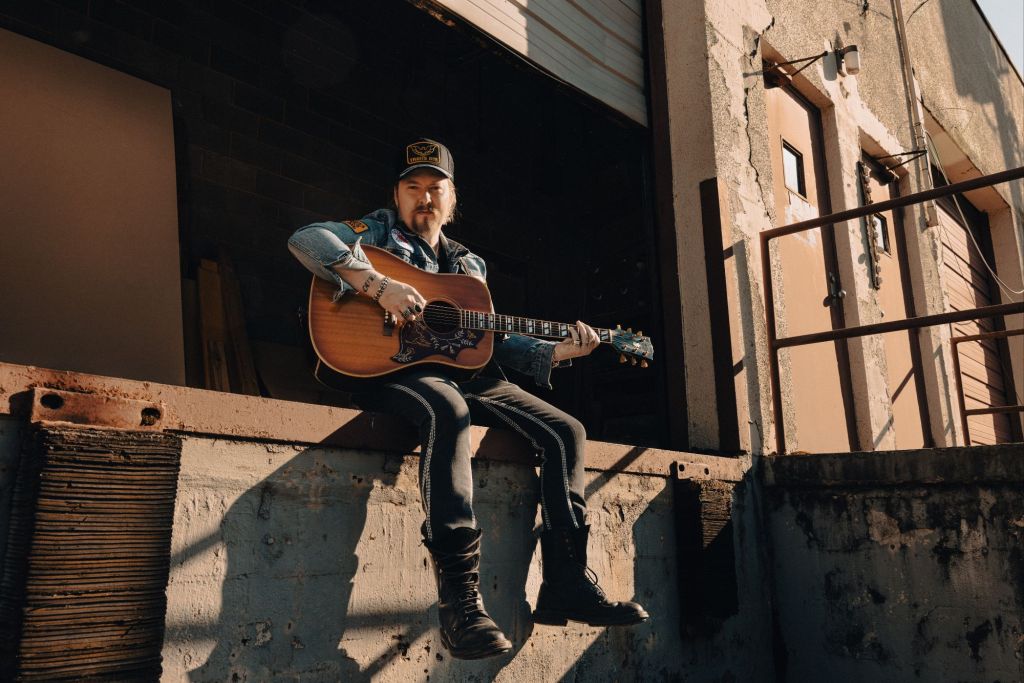
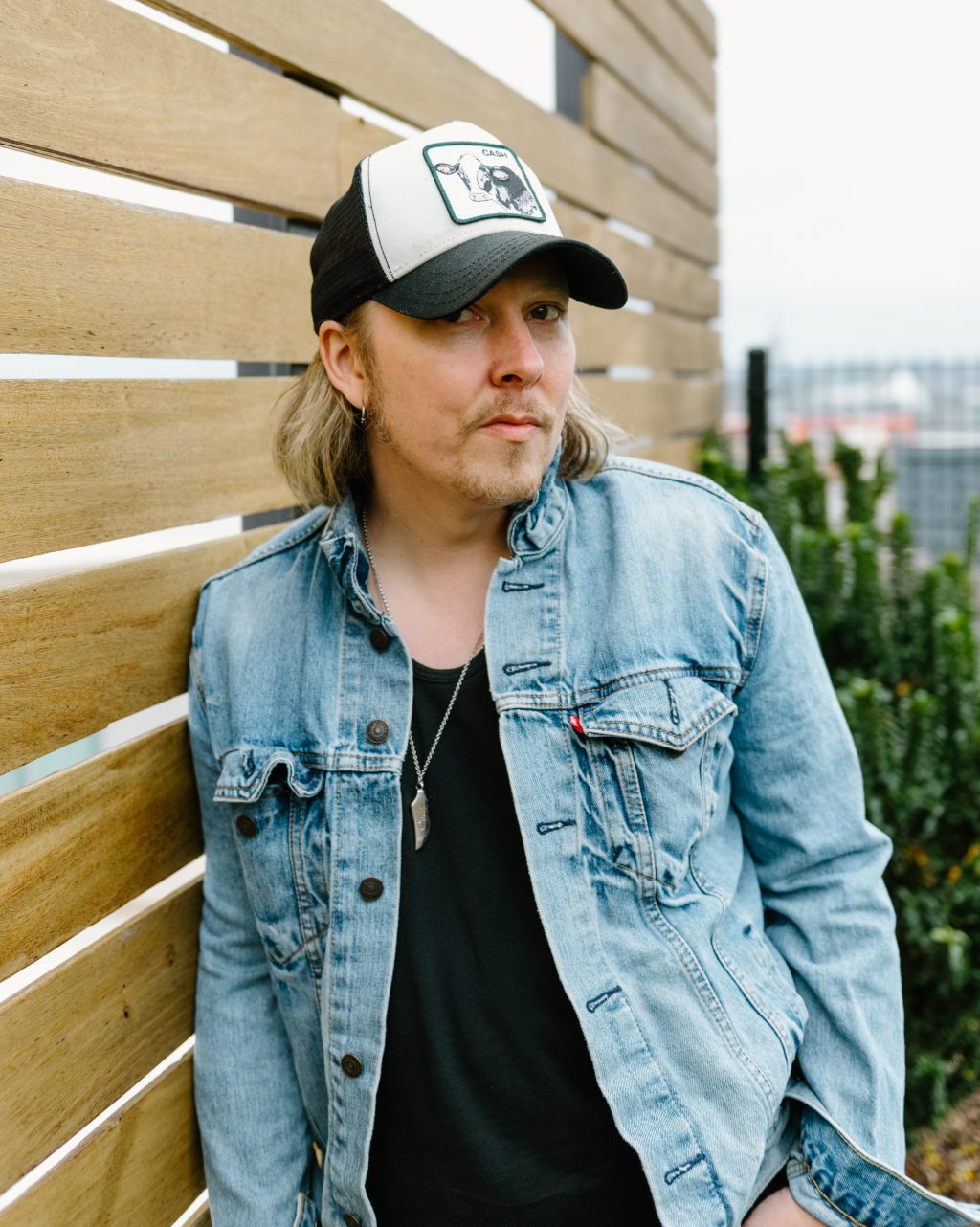
Drew Ryder Smith is a Nashville-based singer-songwriter whose work has been recorded by artists including Merle Haggard and Randy Houser. After years of writing for others, he’s returned his focus to telling his own stories.
His album The Deep End, produced by Glenn A. Tabor III and featuring collaborations with Steve Earle and Rhonda Vincent, is set for release on October 28, 2026.
Connect with Drew through his official website, Instagram, Facebook, and YouTube.
A special thank-you to Drew Ryder Smith for taking the time to answer my questions, and to Crystal Henderson at The Press House for coordinating the interview and providing advance listening access and press materials.
Disclosure: I received advance access to The Deep End for editorial consideration. All opinions and listening impressions are my own.
Until the next rabbit hole, keep collecting stories. You never know which ones will become part of your own. ❤️
Warmly,
Kelly 💜 I’M ME
In My Mom Era




Leave a Reply